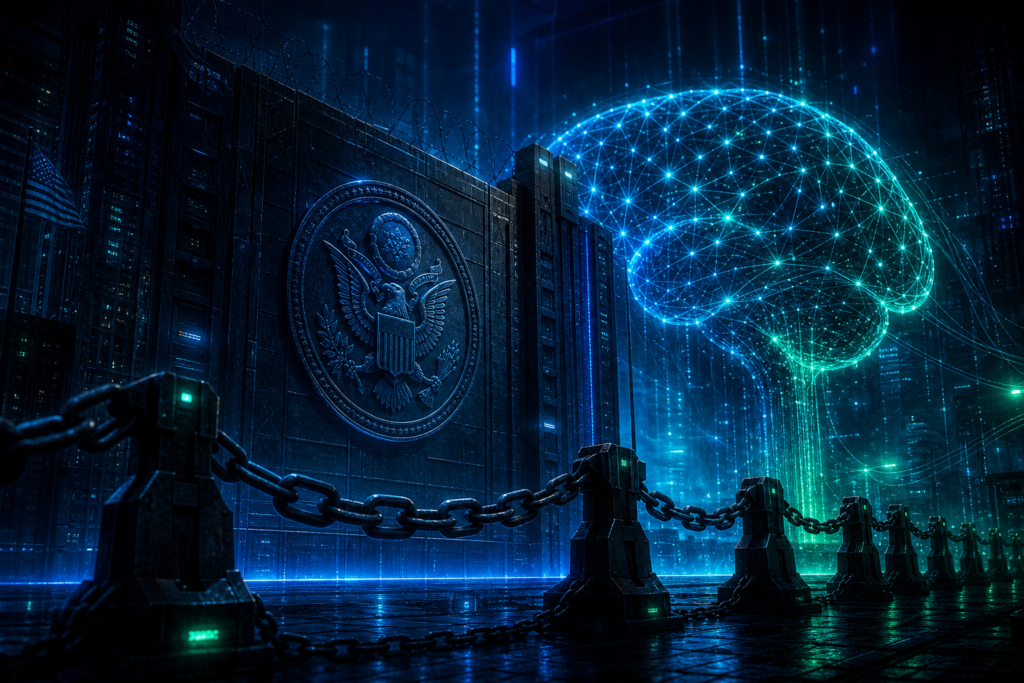


The US government just did what no competitor could: it shut down Anthropic’s most powerful AI models overnight.
On June 19, 2026, Anthropic pulled Fable 5 and Mythos 5 from all access, citing "national security considerations" following a directive from the US Commerce Department. The official reason remains murky, but the impact is immediate and concrete. Businesses that had built workflows, automations, and revenue streams on top of these models lost access instantly. No warning. No migration path. No appeal.
Bloomberg called it "Lutnick’s Anthropic Crackdown." The Washington Post argued "AI is too important to govern by grudge." TechCrunch asked whether the ban was "accidentally helping the brand." Fast Company said "Fable 5 crossed a line the world was not ready for." Every angle missed the real story.
The real story is this: if a single government directive can erase the AI infrastructure your business depends on, you don’t own your stack. You’re licensing someone else’s stack, and they can revoke it whenever politics, regulation, or profit motive demands it.
This isn’t hypothetical anymore. It’s the third time in 18 months that a major AI provider has restricted access to models that businesses were actively running on. First it was API rate limits. Then it was regional availability. Now it’s outright removal.
The Strategic Risk of Centralized AI
Every SaaS business that relies on a single AI API provider is building on sand. You have zero control over pricing, availability, model quality, or continued access. The provider does.
This is exactly what happened to thousands of SaaS companies in 2024 when OpenAI restructured its API tiers and tripled enterprise pricing overnight. Companies that had built their entire product on GPT-4 suddenly faced impossible margins or complete rebuilds.
The Anthropic ban raises the stakes from "expensive surprise" to "existential threat." You’re not just at the mercy of a company’s pricing decisions anymore. You’re at the mercy of government policy.
What AI Independence Actually Looks Like
AI independence doesn’t mean avoiding AI. It means owning the layer where your business logic, memory, and automation execute. It means your system doesn’t break when one provider changes their mind.
The businesses that survived the OpenAI pricing shock did so because they had abstractions in place. They could swap providers without rebuilding their entire stack. But abstraction is just the minimum. The real advantage comes from agentic systems that operate autonomously across multiple models and infrastructure layers.
This is what a Life Operating System does. It sits between your vision and your daily execution, and it doesn’t depend on any single AI provider to function. When one model goes down, the system adapts. When one API gets restricted, the system routes around it. Your memory, your workflows, your relationships, your autonomous actions, they all persist.
The Agentic Future Belongs to the Autonomous
The companies building the next generation of AI-powered business tools aren’t the ones with the biggest model. They’re the ones with the most resilient architecture.
Autonomous agency means your AI doesn’t just respond to prompts. It monitors your goals, detects misalignment, and takes action without waiting for you to ask. It calls contacts, schedules meetings, publishes content, follows up on deals, and manages your reputation across platforms.
None of that requires being locked into one provider’s ecosystem. In fact, it works better when it isn’t.
What This Means for Your Business Today
If you’re running automations on Anthropic’s API, audit your dependency. What happens if Fable-class models disappear for a month? A quarter? Permanently?
If you’re using AI tools that are entirely cloud-dependent with no fallback, you’re one policy decision away from a operational crisis.
The fix isn’t to avoid AI. It’s to own the system that orchestrates it.
Start with a free trial of AchieveAI and see what AI independence actually feels like. Your business runs on your terms, not on a provider’s availability calendar.