


You’re tracking your decisions. Good.
But you’re not learning from them.
A decision journal without analysis is a diary. It tells you what happened. It doesn’t tell you why, or what to do differently next time. The pattern is always the same: you log a choice, review it weeks later, and think "that was obvious." Then you make the same type of suboptimal decision again three months later.
This is the gap. Not between journaling and not journaling. Between recording and understanding.
The founders and operators I work with don’t have a data problem. They have an insight problem. Their lives are full of decisions, most of them made under pressure with incomplete information. They write them down, or they intend to. But the analysis, the part that actually rewires your decision-making, never happens.
Why? Because manual analysis is exactly the kind of high-leverage, low-urgency work that gets perpetually deprioritized.
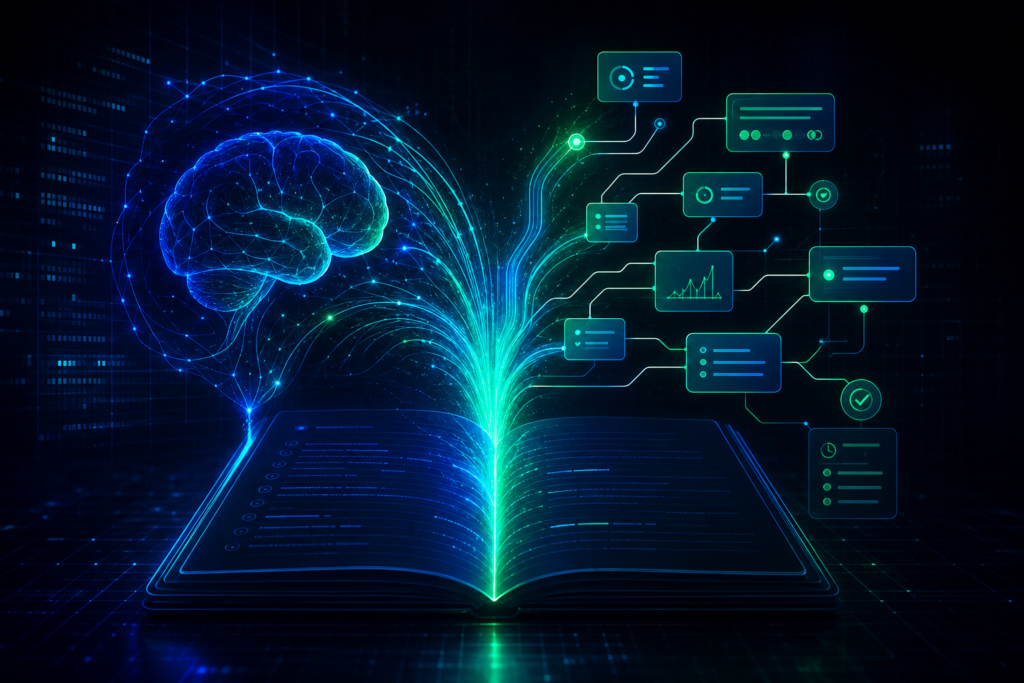
Decision Journaling 2.0 flips the model. You still capture the decision, the context, the expected outcome, and the actual result. But now, an AI system does the heavy lifting.
It tracks your choices over time. It surfaces the patterns you can’t see from inside the process. It notices that you consistently overestimate timelines for technical projects but accurately predict sales cycles. It flags when you’re making a decision from a state of fatigue or scarcity, not strategy. It quantifies your hit rate across different types of calls.
This isn’t theoretical. This is what happens when your decision data meets a cognitive layer that can actually think with you.
Here’s what changes:
- You get pattern recognition at scale. Your brain is terrible at statistical self-analysis. It’s great at anecdotes and confirmation bias. An AI system sees the 50 decisions, not just the last one. It shows you that your "gut feel on hiring" has a 40% accuracy rate, while your "structured process for vendor selection" hits 78%. That’s not an insult. It’s a targeting system for improvement.
- You surface cognitive biases in real-time. Not after the fact. When you log a decision and the system flags "this matches your pattern of optimism bias in resource allocation," you can pause. You can add a constraint. You can ask one more question. The bias doesn’t disappear, but you see it operating.
- You create feedback loops that actually close. The gap between "intended outcome" and "actual result" isn’t just a column in a spreadsheet. It’s a learning signal. When the system can show you that decisions made in the first hour of your workday have a 30% better outcome rate than those made after 4 PM, that’s not a journal entry. That’s a schedule optimization.
Most decision journals fail because they’re passive. They wait for you to have the insight. AchieveAI’s Life OS inverts this. The system actively analyzes your choices against your stated goals, your historical patterns, and the context of each decision. It brings the insight to you.
The meta-pattern is the value. One good decision is luck. A series of good decisions with identifiable characteristics is a skill you can systematize. A series of bad decisions with identifiable triggers is a vulnerability you can defend against.
You don’t need another app to write in. You need a system that reads what you write, connects it to everything else you’re doing, and tells you what it means.
That’s the difference between a journal and a decision engine. One is a record. The other is a competitive advantage.
Ready to stop logging and start learning? AchieveAI’s Life OS automatically tracks, analyzes, and learns from your decisions. See your patterns. Surface your biases. Make your next choice your best one.
Try the system that thinks with you and acts for you. Your decisions deserve more than a page in a notebook.